
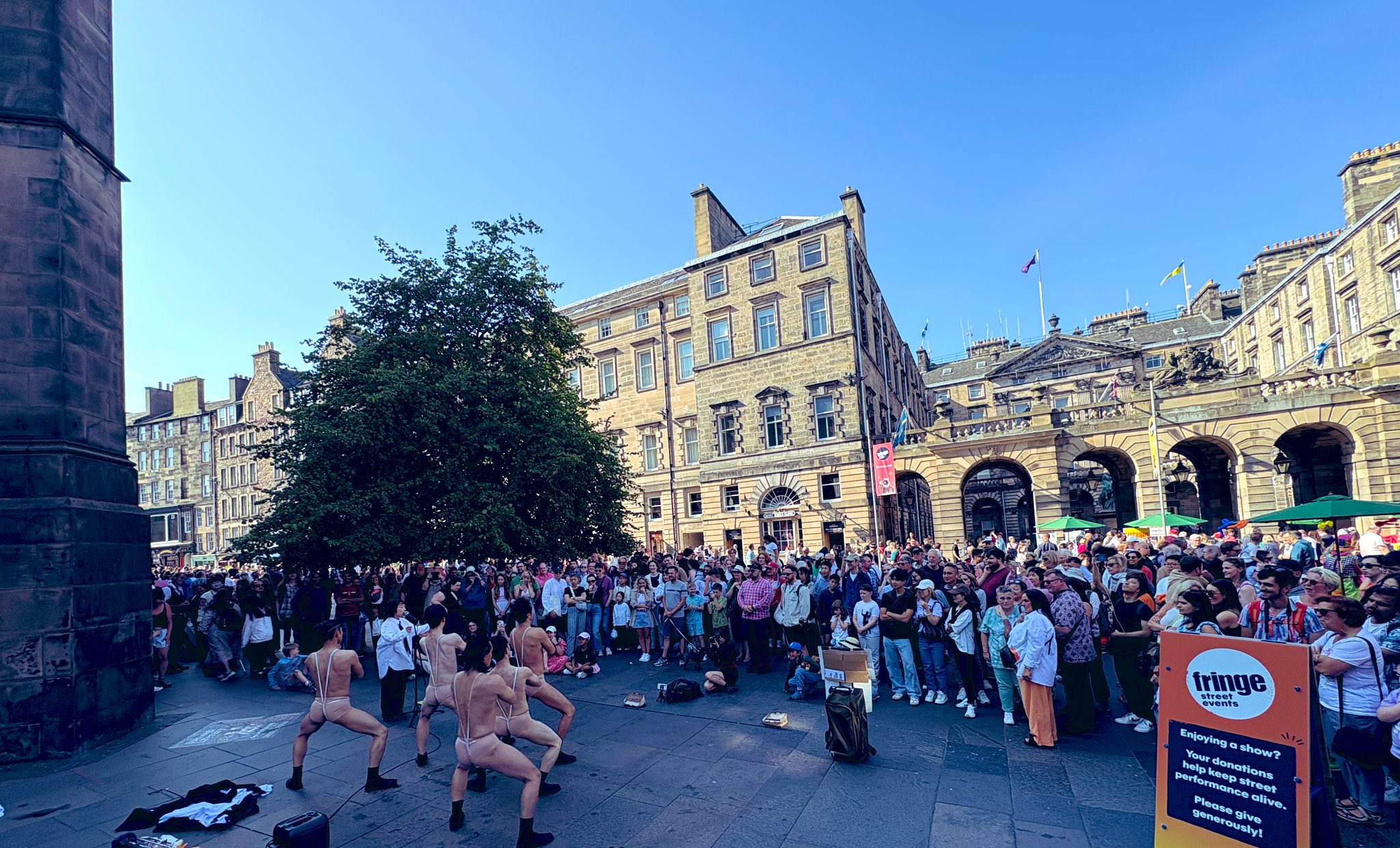
Are you familiar with the 2 Shoulderpads drama project currently storming the international theatre circuit?
Their 50-minute play titled “Shoulder Pads: Galaxy Train”*, based on Kenji Miyazawa’s masterpiece “Night on the Galactic Railroad (銀河鉄道の夜)**”, sold out all 21 performances at the Edinburgh Festival Fringe — the world’s largest arts festival — in August 2025.
Amazingly, it then went on to achieve a remarkable feat that sent shockwaves through the Japanese theatre world by winning the uber-prestigious Mervyn Stutter’s Spirit of the Fringe Award and the festival’s Asian Art Award from among nearly 4,000 participating productions.
The entity behind all this – Theatre Company Shikagoroshi – was founded in 2000 by Chobi Natsuki (director and actor) and Maruichiro Maruo (writer, director and actor) whilst they were students at Kansai University in Osaka.
“Shoulder Pads” refers to the performances in which the actors wear only shoulder pads, a practice that reportedly began as part of the troupe’s training regime. Then in 2020, following the easing of COVID-19, Gekidan Shikagoroshi staged “Night on the Galactic Railroad” in the “Shoulder Pads” style as their first post-pandemic production in a double bill alongside Edogawa Ranpo’s “The Boy Detectives”, garnering a hugely enthusiastic response.
Jstages.com spoke to Chobi Natsuki — the troupe’s co-founder, director and one of its actors — about the circumstances leading to their decision to stage “2Shoulderpads: Galaxy Train” at the 2025 Edinburgh Fringe, where they made their debut and immediately sold out every performance; what actually happened there; and what is happening now as a result of this
remarkable achievement.
*In 2020, the company was known as ‘The Shoulder Pads’, but participated in the 2025 Edinburgh Fringe under the name ‘1Shoulder Pad’; since then, from the Brighton Festival in May 2026, it has been known as ‘2Shoulderpads’.
**Night on the Galactic Railroad” is Kenji Miyazawa’s 1927 Japanese fantasy novel. The protagonist Giovanni is a lonely, poor boy whose mother is bedridden and his father is away. His classmates always ridicule him.
During a star festival, Giovanni boards a magical train and travels across the Galaxy with his only friend, Campanella. The two boys witness amazing sights and meet various people. However, when the train approaches a black hole, Campanella vanishes. Next morning, when Giovanni wakens up, he finds out that Campanella has drowned in the river and passed away.
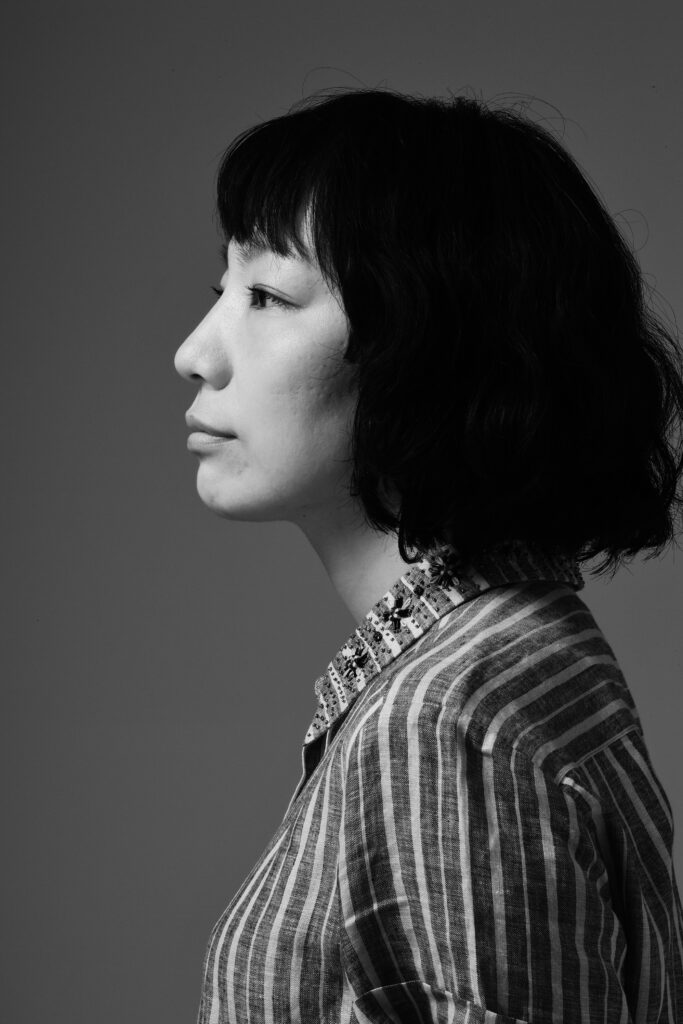
Theatre company Shikagoroshi’s co-founder Chobi Natsuki
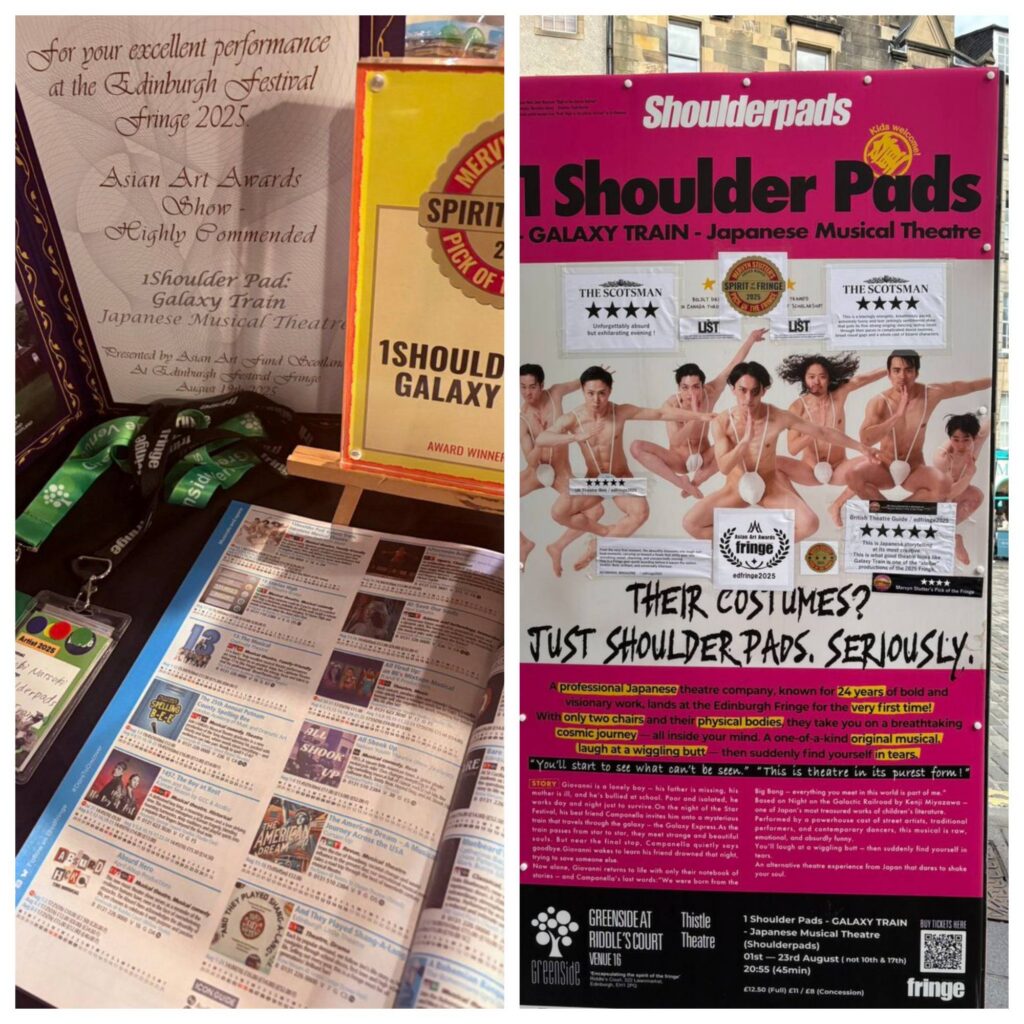
“2Shoulderpads: Galaxy Train” won several Fringe Awards in Edinburgh 2025
First of all, congratulations on your huge success at the UK’s two major fringe festivals (Edinburgh and Brighton).
“We received advice from various senior performers who performed at the Edinburgh Fringe
before, including Ketch-san from “Gamarjobat”*, who had previously enjoyed great success. When we reported our results, Ketch-san told us, ‘Achieving this in your first year is unbelievably impressive’ –– and I was surprised to finally realise just how significant it was.
“However, the reality is that even when I talk about it in Japan, people struggle to grasp the true significance of what we’ve achieved”.
*’Gamarjobat’ – A mime duo formed in 1999 by HIRO-PON and Ketch! won Fringe-related awards at the Edinburgh Festival in 2004 and 2005. They went on to win awards at the Brighton Festival in 2006 and 2007. Since April 2019, HIRO-PON has continued performing solo.
Nonetheless, for a first-time participant from Japan to sell out from the very first day is surely nothing short of a miracle.
“As the venue wasn’t confirmed until the very last minute before the festival opened, our publicity was delayed, and we were only able to put up a minimal number of posters. So when we arrived and heard the first day was sold out’, we were actually quite taken aback ourselves. By that point, performances up to about the third day were already sold out, and from then on, tickets for the evening shows were selling out by midday every single day. Wondering why this was, I asked the audience, and they told me they’d been checking the Fringe website and, based on the visual images and descriptions there,they thought, ‘This looks interesting’, so they bought tickets.
“Perhaps Fringe regulars have a knack for sniffing out what’s good? Flyers and promotional images for overseas productions tended to be rather abstract and artistic, but as it was our first year participating, and we were actually funding parts of it out of our own pockets, we went ahead with the resolve that the company might well fold if things went wrong. So we decided to create promotional material that, even if it was a bit tacky, would make it absolutely clear what we were doing — in other words, to show that ‘this is the look we’ll be performing in’ (costumes consisting solely of shoulder pads). It seems this approach paid off in the end.
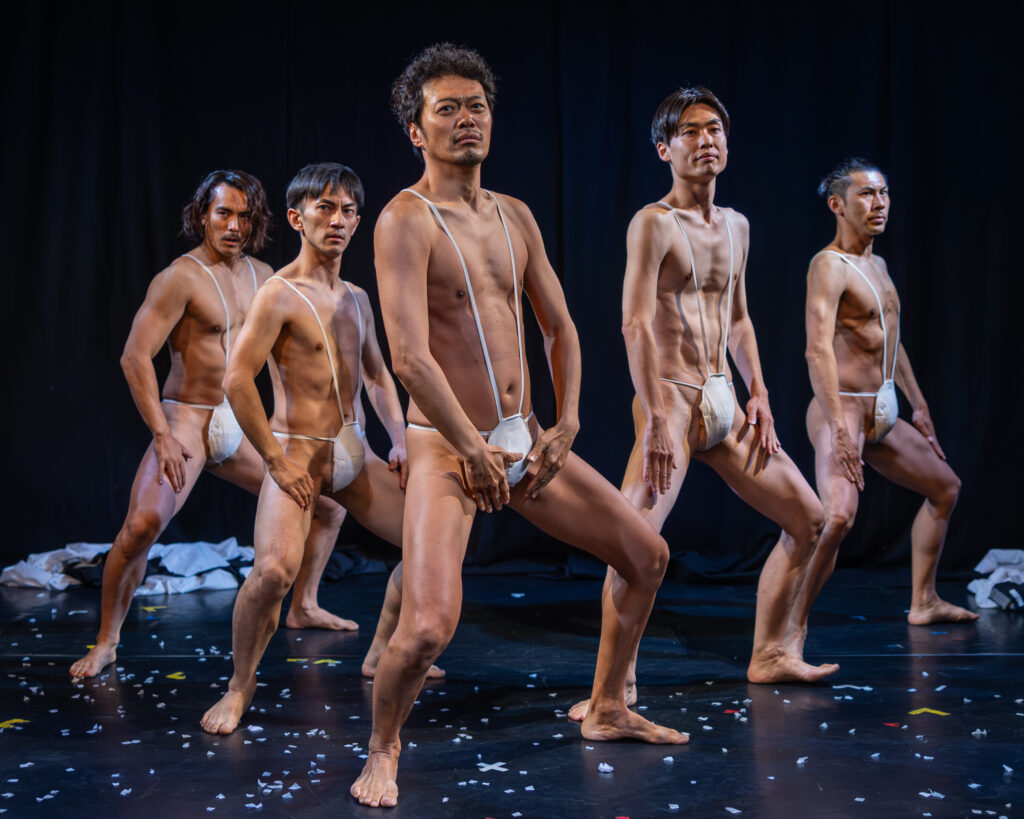
“2Shoulderpads: Galaxy Train” stage photo in 2025
I read in a magazine that the prototype for the shoulder pads was created about 15 years ago.
“We’d set up a theatre company and had been performing in the Kansai region for a while when, during that time, I happened to spot Jūrō Kara putting on a performance in a park with just a tent, and I was completely blown away by his charisma. The audience ranged from young, rather intellectual-looking types to ordinary elderly gentlemen, and I thought to myself, ‘Mr Kara is amazing — to be seen as so cool by such a diverse crowd of men and women of all ages’. That’s when we decided to start performing on the streets, determined to cultivate that same ‘charisma’ for ourselves. For instance, when we stood alongside a rock band, we wanted people to say we looked cooler than them; we wanted to have something that would make them say that. From there, we began staging plays in live music venues as well. But standing next to musicians who turned up with nothing but a single guitar, whilst we were kitted out with props and costumes, we started to feel rather uncool. So, just as a single guitar can change the world, we realised that theatre has the incredible power to change the world with just one’s own body. We began performing pieces during the short intervals between the bands’ sets in which we were completely naked, with nothing else covering our bodies except shoulder pads.
“We started ‘Shoulder Pads’ with the aim of making people laugh right from the start by performing in nothing but shoulder pads, then capturing the attention of those who’d come to see the band by showcasing our well-trained physical performance, and drawing them into the theatre. After that, when we started performing in theatres as well, more people who’d taken an interest whilst watching us on the street began coming to see us, and as a result, more people grew to love theatre. That’s when I truly realised the power of ‘Shoulder Pads’.
“In Edinburgh, we began the main performance with a narration: ‘When it became difficult to keep the theatre company going during the pandemic and we had no money to buy costumes, we came up with this piece.’ In fact, as our very first performance after the pandemic, we staged this piece — which really showcases the power of theatre — and, given the uncertainty of when we might be unable to perform again due to the pandemic, we decided to put on a production that required minimal expenditure. When ‘Shoulder Pads’ was first created, the aim was to hone our personal qualities; however, when we took on the challenge of Edinburgh, we wanted people to see that, even in a faraway corner of the world (Japan), there are those who continue to do theatre precisely because they feel vulnerable — as a reason to carry on after the pandemic had eased. That’s why we decided to take this production there”.
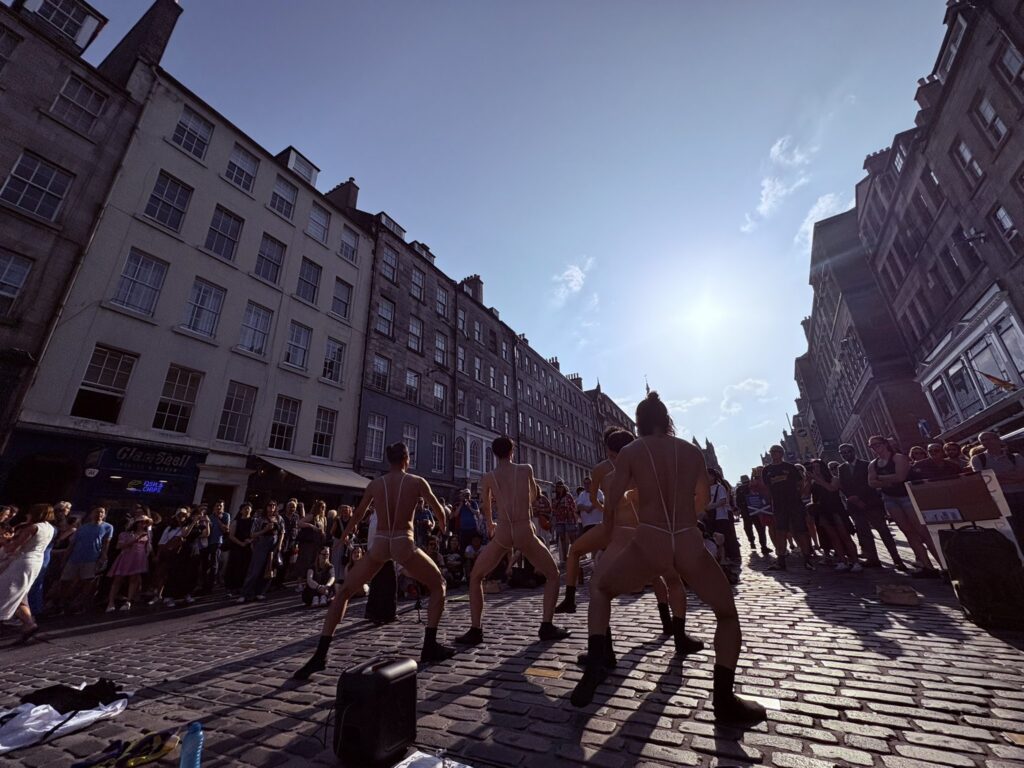
Short performance on the main street in Edinburgh 2025
Given the recent rise in the cost of living, was your decision to participate full-time in the Edinburgh Fringe (from start to finish during the festival period) driven by a long-standing interest in expanding overseas?
“One reason was that I was able to spend a year studying in Canada in 2013 through the Agency for Cultural Affairs’ Overseas Training Programme for Emerging Artists. Another was that I really loved the Cirque du Soleil production ‘The Beatles LOVE’ in Las Vegas. That show demonstrated to me that there are works which possess something primal — something that isn’t complicated but can be understood anywhere in the world — and which convey emotion and nostalgia even without words; this was a key factor in my decision to try staging a production overseas.
“I’d always felt that much of the Japanese theatre performed overseas was highly artistic, and that much of it appealed to a sensibility shared by Japanese people; so I’d long harboured a desire to one day try my hand at something simpler — something that could move people simply through emotions that everyone, from adults to children, could share.
“I believe the Theatre Company Shikagoroshi belongs to a minority within the Japanese theatre world, and I myself consider myself part of a minority who, if anything, struggles to cope with my own emotions. However, I feel that in every city there are a few people who, like me, find life difficult, and when I considered this on a global scale, I thought this might be the kind of production they need — which is why I decided to take it out into the world.
“That said, I used to want to tour abroad with a full-scale theatre company production and waited about 10 years to be invited. However, realising that my turn would never come if I just waited, I resolved to go before my body gave out. So I began my research, and decided to participate on a scale that was practically feasible. I believe the British audience found meaning in that ‘back-to-the-wall’ resolve and in the production we had pared down specifically for the Edinburgh Festival.
“Some audience members told me after the show that they felt there was something special about us — that we’d come from Japan with the bare minimum yet were striving to give our absolute all — and I was deeply moved that they’d observed us so closely. I’d been worried it might all end with people simply thinking, ‘Oh, some Japanese people came abroad, stripped off and put on a show’, so when the actors turned round during the opening and the audience reacted with, ‘Oh, these lot are the real deal’, I felt as though we were performing at home, knowing that there were people here who understood us.
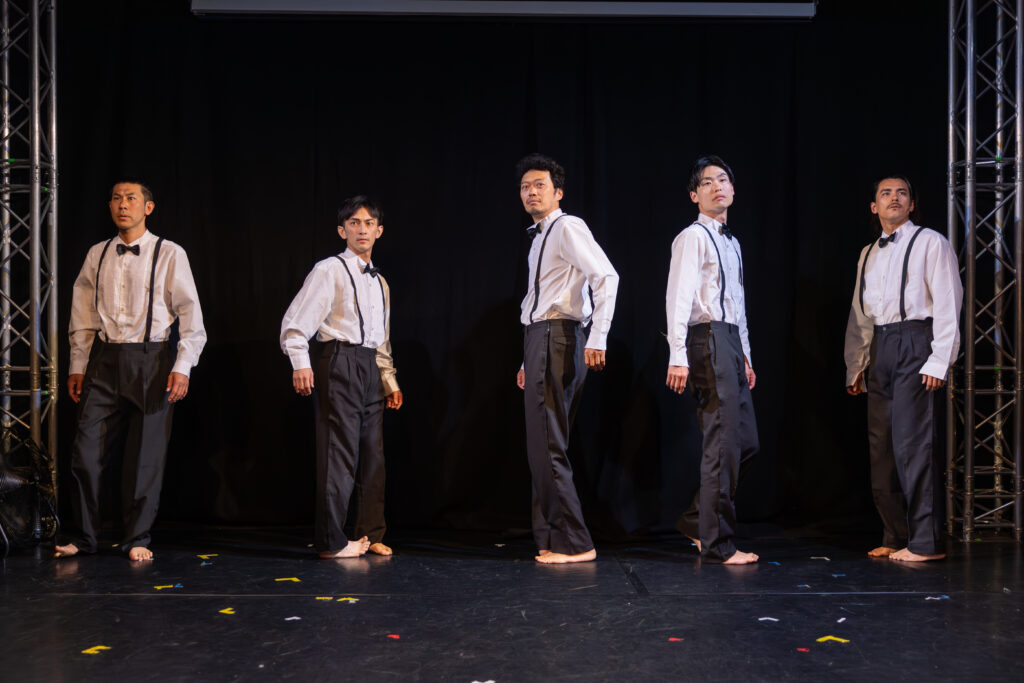
“2Shoulderpads: Galaxy Train” stage photo in 2025
“In Japan, with the economy in a slump and ticket prices high, it’s often the case that people base their decision about whether to buy a ticket on background information — such as the theatre company’s track record, who will be the actors, or whether the production features an award-winning actor. I had been feeling rather disheartened as a theatre company that had built up a long career but struggled to attract audiences unless we could present some sort of track record. However, in Edinburgh, I was able to meet, for the first time in a long while, repeat customers who came to see the show without knowing anything about it and said they’d be back the next day, as well as audiences who came because the leaflet had really caught their eye. It was a joy to meet audiences who evaluated us based solely on their own judgement — not on our track record or prior reputation — such as those who came back five times or even travelled all the way to our Brighton performance.
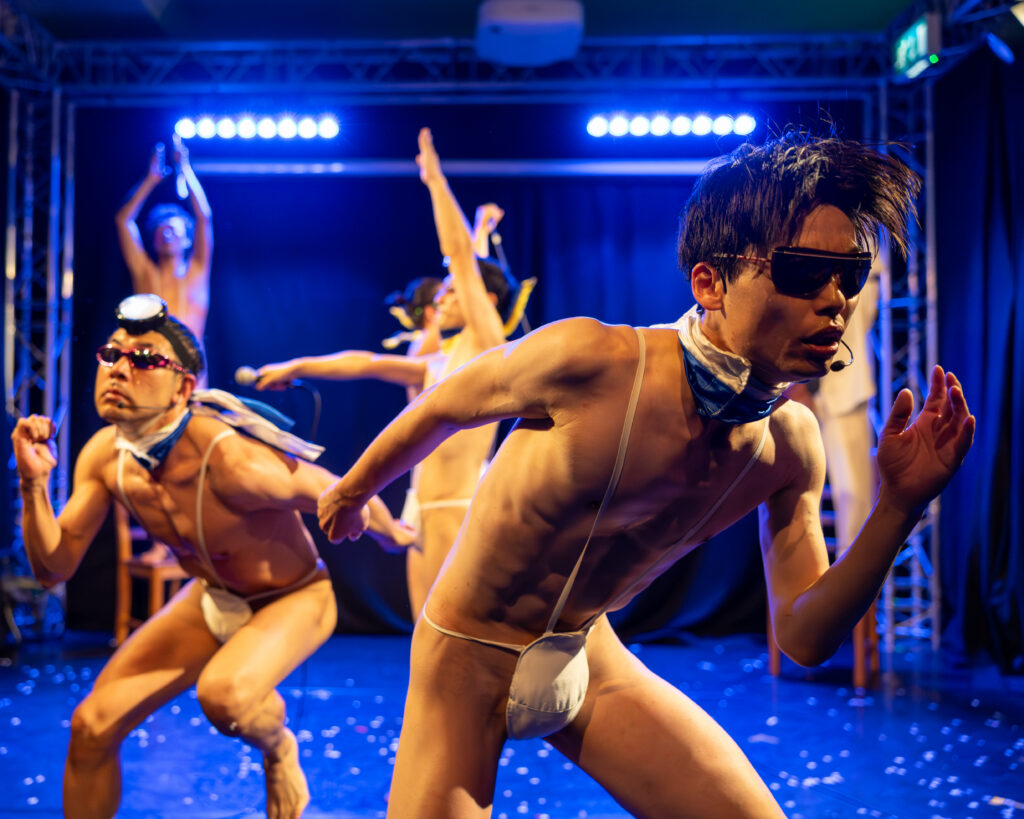
“2Shoulderpads: Galaxy Train” stage photo in 2025
“I imagine that in Japan, people have to choose one show to see from a wide range of options, but as people in the UK watch a lot of theatre as part of their everyday lives — it’s part of how they spend their money, so to speak — theatre occupies a different position in their lives; it’s more accessible than it is in Japan. Well, I suppose one reason is that tickets are cheap at the Fringe, so people feel free to pop along and see a show”.
I think choosing Miyazawa’s masterpiece “Night on the Galactic Railway” as your subject was a good decision, wasn’t it?
“That’s true. Kenji Miyazawa, whom everyone in Japan knows, isn’t very well known here,
and nobody is familiar with the story of ‘Night on the Galactic Railroad’ either, but the audience still followed the themes — such as life and death — and the storyline properly.
“A young woman who’d lost a close friend last year came up to me in tears to share her thoughts; I could sense that she’d not only grasped the main plot but had also related it to her own life. I’ve been involved in theatre because I’ve always wanted to create plays with that kind of immediate impact — ones that change people’s behaviour after they’ve seen them — so in that respect, I feel it must have resonated with the British audience to some extent, and I’m glad we went ahead with it. It’s wonderful that the message came across clearly to people who saw it on the spot without any prior knowledge. Also personally, looking at it objectively, I think it’s quite a feat “(laughs).
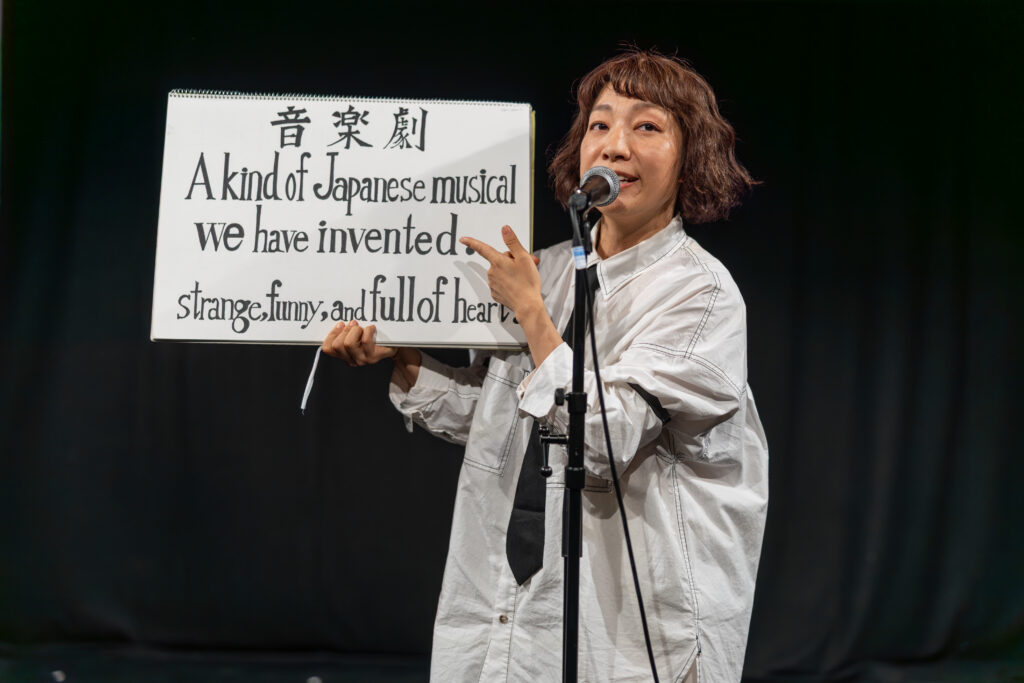
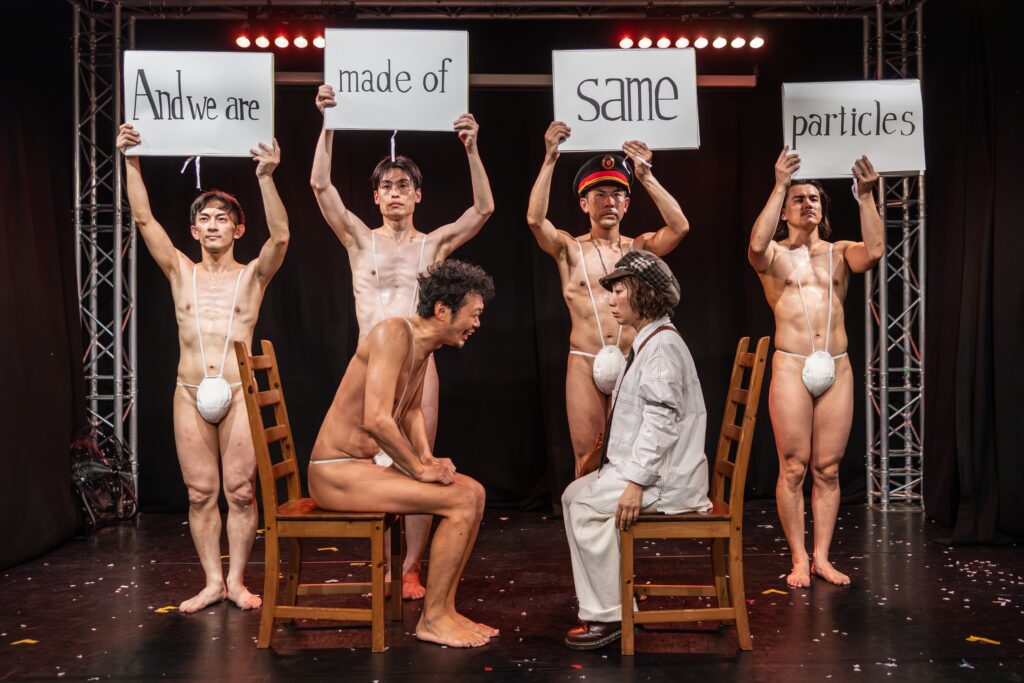
“2Shoulderpads: Galaxy Train” stage photo in 2025: The actors speak lines in English, and if it’s necessary, they hold English subtitle-cards
I imagine the two and a half years of preparation played a part in this success –what particular aspects did you focus on during that time?
“It might come as a surprise, but we’re serious by nature and quite strict when it comes to spending money; after all, as this was a production funded by crowdfunding with contributions from so many people, we were determined to achieve the very best results. It was difficult right from the start just to book a theatre; in the first year we applied, we were unable to secure a venue. I felt it wouldn’t be worthwhile unless we could keep it going for several years, so I asked people who had taken part in the past which theatres would be worth staging a performance in. I therefore set my sights on a relatively well-known theatre, but they wouldn’t accept us unless we had some track record, such as having won an award at other theatre festivals in the past. So, thinking ‘at least this much’, I narrowed down my search to areas where people tend to gather. I managed to secure the Thistle Theatre, a small, independent venue run by a group called Greenside, near Edinburgh Castle.”
How was the support from the theatre staff there?
“As it was a small theatre, it felt less like a professional operation and more like it was run by young theatre enthusiasts. The stage manager would change without giving us any notice, but on the other hand, they were very easy-going; on extremely hot days, they’d tell us it was fine to throw open all the windows facing the street, so we ended up performing with the sound of a large fan mingling with the music. It’s incredibly rare to be sold out from the very first day, so the staff kept telling us, ‘You lot are legends’.
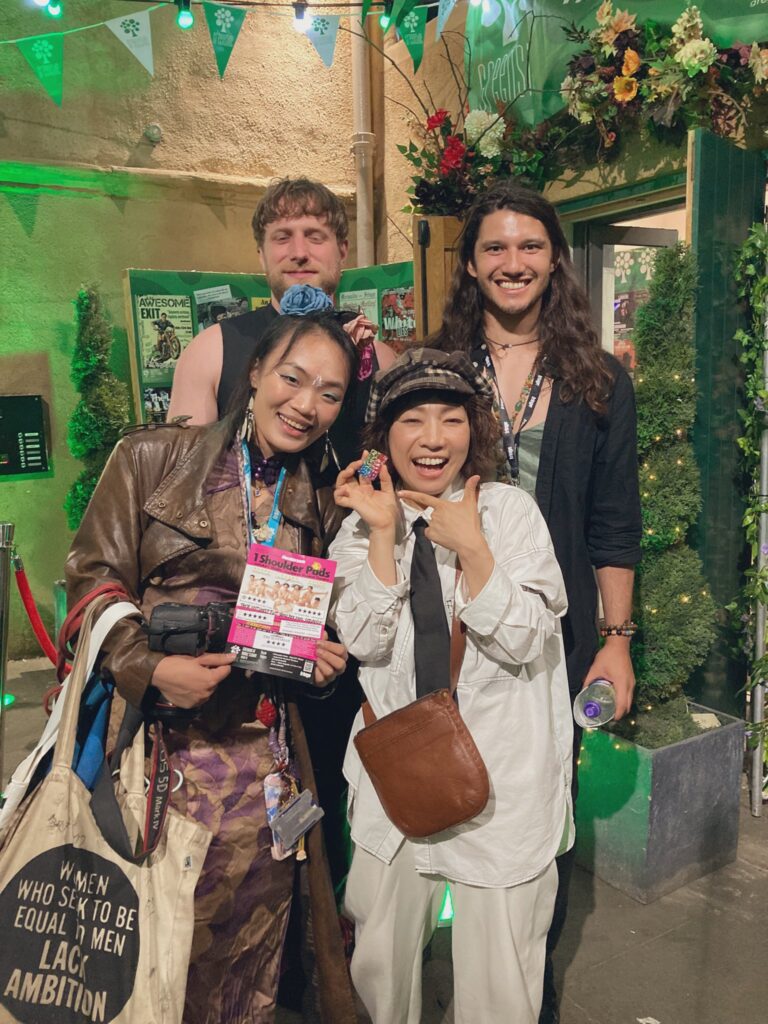
Chobi Natsuki, theatre staff and an audience after the show
“As it was our first time taking part, we didn’t quite grasp just how significant the Mervyn Stutter Spirit of the Fringe Award was, but they were absolutely buzzing about it, exclaiming, ‘That’s amazing! Unbelievable!!’ It was Greenside’s highest-grossing show since the venue opened and had the highest attendance figures. It made us so happy to see them getting so excited and telling us, ‘You lot are legends’.”
Mr Maruo said, “we’d ‘packed everything the Theatre Company Shikagoroshi has aimed for and practised into a performance of just under an hour.” But what exactly is it that you’ve been aiming for?
“It’s about giving meaning to the individuality of each person, including physical expression that conveys the essence of their life through the body. It’s about not just how a role is played, but also showing how the actor has lived their life, and using the body to make the audience fall in love with the actor’s own charm. Then there’s the intensity of the imagery the actors convey. I don’t consider myself an artist, but I do value the fact that I possess something within my body — even without the special abilities of, say, a ballet dancer — that allows me to earn an audience’s money; this is something we constantly share amongst the members”.
How did Brighton go in May this year, as it marked your second UK tour?
“A producer from Brighton who had seen our performance in Edinburgh invited us to the Brighton Festival, and they also secured a grant for us from an organisation that provides grants to festival participants. That didn’t cover all the costs, but we were so grateful that a complete stranger would go to such lengths for us that we decided to take part.
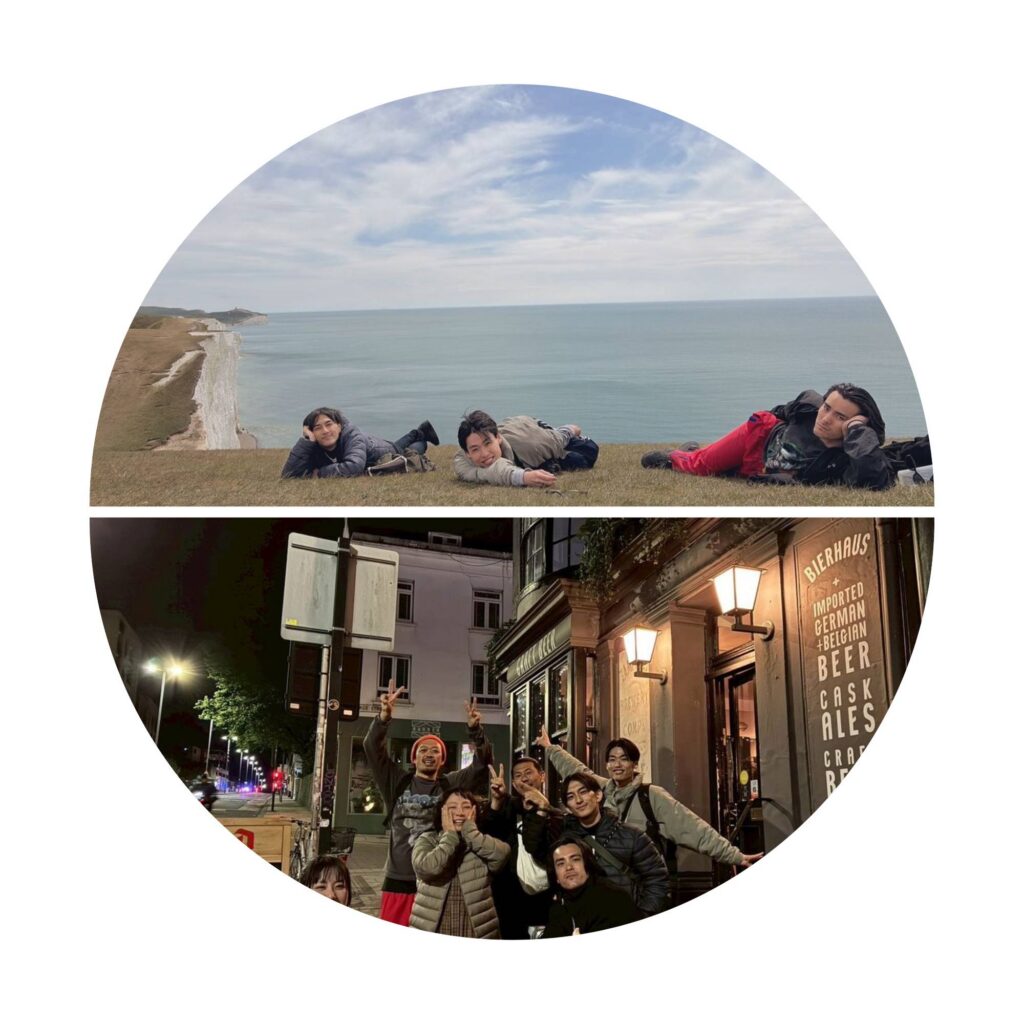
Members enjoy sunshine and Beer in Brighton
“Although it was on a smaller scale than Edinburgh, we could really sense the audience’s enthusiasm for discovering something new and interesting. Thanks to everyone’s support, our shows in Brighton were sold out and we had to add an extra performance. The staff were just as enthusiastic as in Edinburgh, but the audience’s enthusiasm was even more incredible. Just a little while ago, a mum I’d seen pushing a pram in the town centre came to see the show with her three children, and we also received a standing ovation unlike anything we’d ever experienced before. Even when we were handing out leaflets in the town centre, lots of people stopped to listen to us and actually came to see the show – it was such a kind town”.
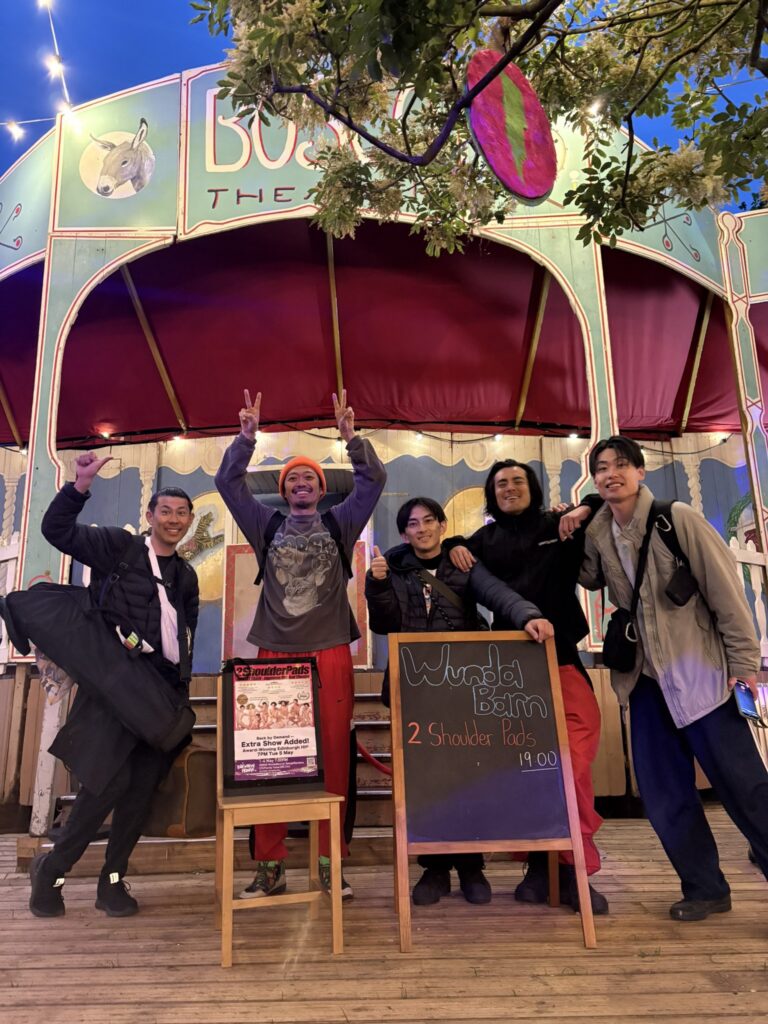
In Brighton in May 2026
You’ll be performing in Edinburgh again in August (2026). Are there any changes you plan to make, or is there anything new you’d like to try?
“This year, we’ll be performing full-time at a different venue — the Underbelly Cowgate, one of the major Fringe venues with 123 seats — just as we did last year. We’ll be incorporating some of the directorial touches we added during our triumphant return performance in Japan, such as the use of water in the Kabuki scene. As the Underbelly is a mainstream theatre, I’m looking forward to seeing just how far we can push the boundaries there.
“Also, after Edinburgh, we’ve been given the opportunity to perform for just one day in London — on Sept. 2 at Underbelly Soho, part of the Underbelly network. So I’m looking forward to that as well.
“Upon our return to Japan, our homecoming run, ‘CUBE GLOBAL STAGE PRESENTS’, will begin in November at CBGK Shibugeki!! Theatre in Shibuya. A producer from CUBE saw the show in Edinburgh, and in line with the recent increase in inbound tourism, we aim for a long-running production that attracts audiences from overseas. When we staged ‘Shoulder Pads’ as a theatre company, we struggled to attract audiences, partly because the flyer featured a naked man. So it remains to be seen how widely the play will resonate here in Japan. However, if people see it just once, I’m sure they’ll appreciate its merits and become fans.
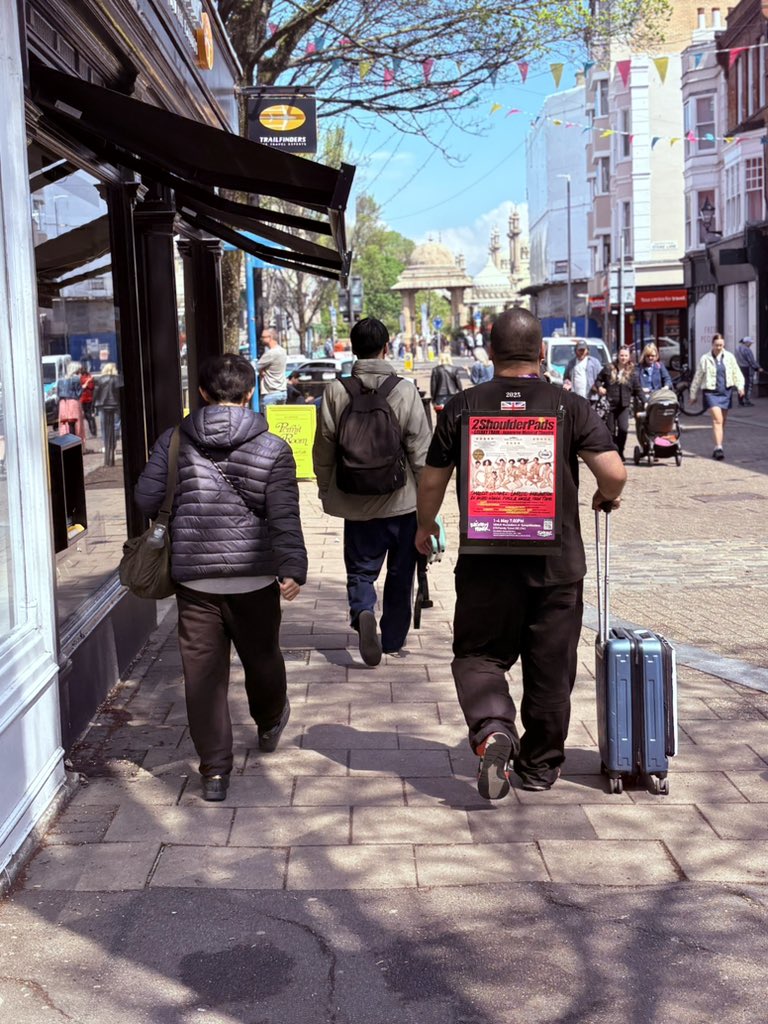
Walking around town center in Brighton
“As a Japanese production that’s been well-received overseas, I believe that if people from all walks of life — not just theatregoers — come to see it, the audiences’ stratum will change once again. Seeing international audiences moved to tears by a production built entirely on the foundations of Japan’s small-theatre scene makes me hope that people in Japan will also take an interest.
“Furthermore, as I believe there are many foreigners in Japan — and children who are more proficient in English than in Japanese — I’d like to present an English-language play that isn’t merely educational. Since it’s based on a work by Kenji Miyazawa, I think it would be wonderful if, for example, international schools’ students could come to see it as part of their curriculum. It’s a production that demonstrates how theatre relies on the audience’s imagination, so I’d like children and students to see it as an introduction to theatre.
A review from Edinburgh described it as ‘bold, inventive, and surprisingly moving – this is Fringe spirit we seek to enjoy’. What do you think about the review?
“I truly feel as though I’ve found a community in the UK. It felt so comfortable that I even found myself thinking I might have been meant to live in the UK all along. In Canada, theatre has a bit more of an ‘adult pastime’ feel to it; artists are well treated and there’s a plentiful supply of grants, so it seemed the theatres could run themselves on membership fees alone without having to go out of their way to attract audiences. Yet whilst we as creators are fortunate there, it felt as though theatre was regarded as a rather highbrow pastime.
“I’d thought the UK might be even more like that, but I was deeply moved to find fellows who understood me on such a fundamental level. I was also delighted that the journalists who interviewed me approached me with genuine curiosity, asking, ‘Since you’ve come all the way from Japan, what is it you want to do?’”
What are your plans for the future?
“We’ve been advised by those who’ve participated in the Edinburgh Fringe before us that it’s best to run the same production for three years, so we’d like to return to the Fringe in our third year, refining the piece as we go. At the same time, I feel that this first production has conveyed the kind of creators we are, so I’m also interested in creating other works overseas, or having people from other countries perform ‘Shoulder Pads’ – in other words, passing on our physicality and humanity to performers abroad.
“As well as wanting to perform in various countries, I’d also like to meet people in those places who want to experience and perform ‘Shoulder Pads’ for themselves. Furthermore, I’d like to take on the challenge of staging a larger-scale musical overseas with those who have connected with this production”.
2Shoulderpads ‘2Shoulderpads: GALAXY TRAIN’ Edinburgh shows
Performance dates: Aug. 5–30, 2026. All shows last 60 minutes and start at 14:15.
Venue: Underbelly Cowgate (Belly Button), Edinburgh, UK
Details: https://shika564.com/shoulderpad
or https://underbellyedinburgh.co.uk/events/event/2shoulderpads-galaxy-train
2Shoulderpads ‘2Shoulderpads: GALAXY TRAIN’ London shows
Performance dates: Sept. 2, 2026, starting at 20:00
Venue: Underbelly Boulevard Soho, London, UK
Details: https://shika564.com/shoulderpad
or https://underbellyboulevard.com/tickets/2shoulderpads-galaxy-train/
* PADS — a support scheme to help 2Shoulderpads continue their activities, has been
launched.
For further details visit:
https://note.com/apt_impala6699/n/nacac8b8bb105?app_launch=false